
Contents
- 🎵 Origins & History
- ⚙️ How It Works
- 📊 Key Facts & Numbers
- 👥 Key People & Organizations
- 🌍 Cultural Impact & Influence
- ⚡ Current State & Latest Developments
- 🤔 Controversies & Debates
- 🔮 Future Outlook & Predictions
- 💡 Practical Applications
- 📚 Related Topics & Deeper Reading
- Frequently Asked Questions
- Related Topics
Overview
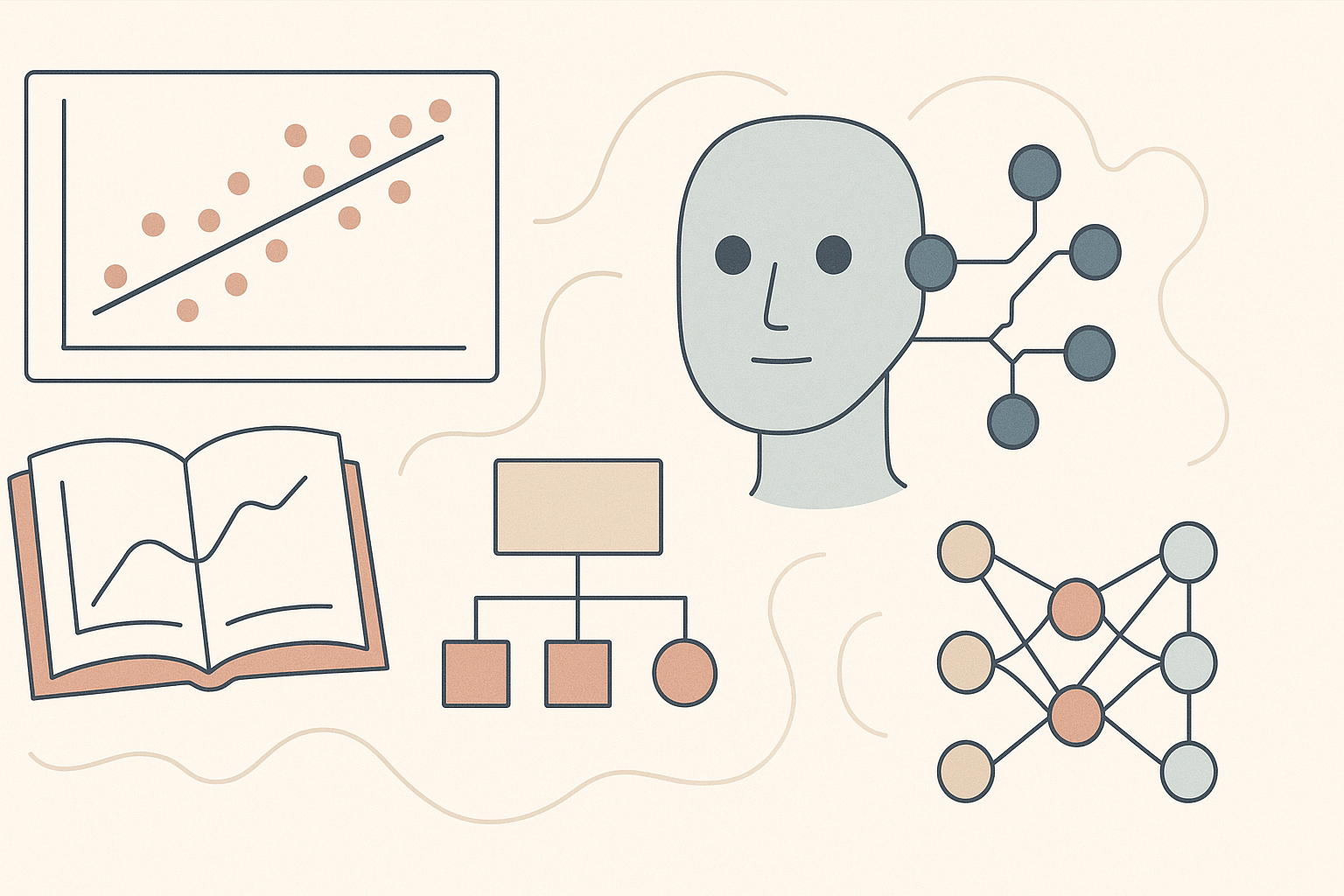
Machine learning (ML) focuses on the development of algorithms capable of learning from data and making predictions or decisions without explicit programming. This field has gained immense significance, particularly with the rise of deep learning, which utilizes neural networks to achieve unprecedented performance levels in various tasks. The foundation of machine learning lies in statistics and mathematical optimization, with applications ranging from image recognition to natural language processing. Understanding machine learning is essential for anyone looking to navigate the increasingly data-driven world.
🎵 Origins & History
Machine learning's roots can be traced back to the 1950s when pioneers like Alan Turing and John McCarthy laid the groundwork for artificial intelligence. Over the decades, advancements in computing power and data availability have propelled the field forward, with significant milestones including the introduction of decision trees in the 1980s and the rise of neural networks in the 2000s. The 2010s marked a turning point with the advent of deep learning, which has since dominated the landscape of machine learning research and applications.
⚙️ How It Works
At its core, machine learning operates through algorithms that learn from data. These algorithms can be categorized into three main types: supervised learning, unsupervised learning, and reinforcement learning. In supervised learning, models are trained on labeled data, allowing them to make predictions on new, unseen data. Unsupervised learning, on the other hand, involves finding patterns in unlabeled data, while reinforcement learning focuses on training models through trial and error to maximize rewards. The mathematical underpinnings of these processes often involve statistical techniques and optimization methods, enabling machines to improve their performance over time.
📊 Key Facts & Numbers
Key figures in the machine learning domain include Geoffrey Hinton, known as the 'Godfather of Deep Learning,' who contributed significantly to the development of neural networks. Organizations such as the Association for the Advancement of Artificial Intelligence (AAAI) promote research in machine learning and collaboration within the field.
👥 Key People & Organizations
Machine learning has permeated various aspects of culture and society, influencing everything from entertainment to healthcare. For instance, streaming services like Netflix reportedly use machine learning algorithms to recommend content based on user preferences, while healthcare providers leverage predictive analytics to improve patient outcomes. The impact of machine learning on social media is also profound, with platforms like Facebook employing algorithms to curate news feeds and target advertisements. As machine learning continues to evolve, its influence on daily life will only grow, raising questions about ethics and privacy.
🌍 Cultural Impact & Influence
As of 2024, machine learning is at the forefront of technological innovation, with advancements in natural language processing (NLP), computer vision, and autonomous systems. Companies are increasingly adopting machine learning solutions to enhance operational efficiency and drive decision-making. Notable recent developments include the release of advanced NLP models like OpenAI's GPT-4, which has transformed how machines understand and generate human language. Additionally, the integration of machine learning into edge computing is enabling real-time data processing in devices, further expanding its applications.
⚡ Current State & Latest Developments
Despite its advancements, machine learning is not without controversy. Ethical concerns surrounding bias in algorithms and data privacy are debated in the context of machine learning. Critics argue that machine learning systems can perpetuate existing biases present in training data, leading to unfair outcomes in areas such as hiring and law enforcement. Proponents, however, emphasize the potential for machine learning to drive innovation and improve efficiency across sectors. The ongoing discourse around these issues highlights the need for responsible development and deployment of machine learning technologies.
🤔 Controversies & Debates
Looking ahead, the future of machine learning is poised for continued growth and transformation. Emerging trends include the rise of explainable AI, which seeks to make machine learning models more transparent and interpretable, and the integration of machine learning with quantum computing, potentially revolutionizing data processing capabilities. As machine learning evolves, its role in shaping the future of technology and society will be critical.
🔮 Future Outlook & Predictions
Machine learning is applied across various industries, including finance, healthcare, and marketing. In finance, algorithms are used for fraud detection and risk assessment, while in healthcare, machine learning aids in disease diagnosis and personalized treatment plans. The marketing sector utilizes machine learning for customer segmentation and targeted advertising, enhancing engagement and conversion rates. Additionally, machine learning is instrumental in autonomous vehicles, where it processes vast amounts of data from sensors to navigate and make decisions in real time.
💡 Practical Applications
Related topics include artificial intelligence, data science, and big data. For those interested in exploring further, consider reading about deep learning, neural networks, and reinforcement learning. Each of these areas offers unique insights into the capabilities and future directions of machine learning.
Key Facts
- Year
- 2024
- Origin
- Global
- Category
- tech-guides
- Type
- concept
Frequently Asked Questions
What are the main types of machine learning?
The main types of machine learning include supervised learning, unsupervised learning, and reinforcement learning. Supervised learning involves training algorithms on labeled data to make predictions, while unsupervised learning focuses on identifying patterns in unlabeled data. Reinforcement learning, on the other hand, teaches algorithms to make decisions through trial and error, maximizing rewards. Each type has unique applications and methodologies, making them suitable for different tasks.
How is machine learning used in healthcare?
Machine learning is revolutionizing healthcare by enabling predictive analytics for patient outcomes, personalized treatment plans, and diagnostic assistance. For instance, algorithms can analyze medical images to detect diseases like cancer with high accuracy. Additionally, machine learning models can predict patient readmission rates, helping healthcare providers improve care.